Solution
PulseSense
Sentiment Analysis System
Reads the conversations your team already has on WhatsApp and turns them into client health scores, recurring issues and response performance.
The problem it solves
For a lot of businesses the real relationship lives in a WhatsApp group, not in a CRM. That is where clients complain, escalate and quietly get frustrated — and none of it reaches a dashboard until someone leaves.
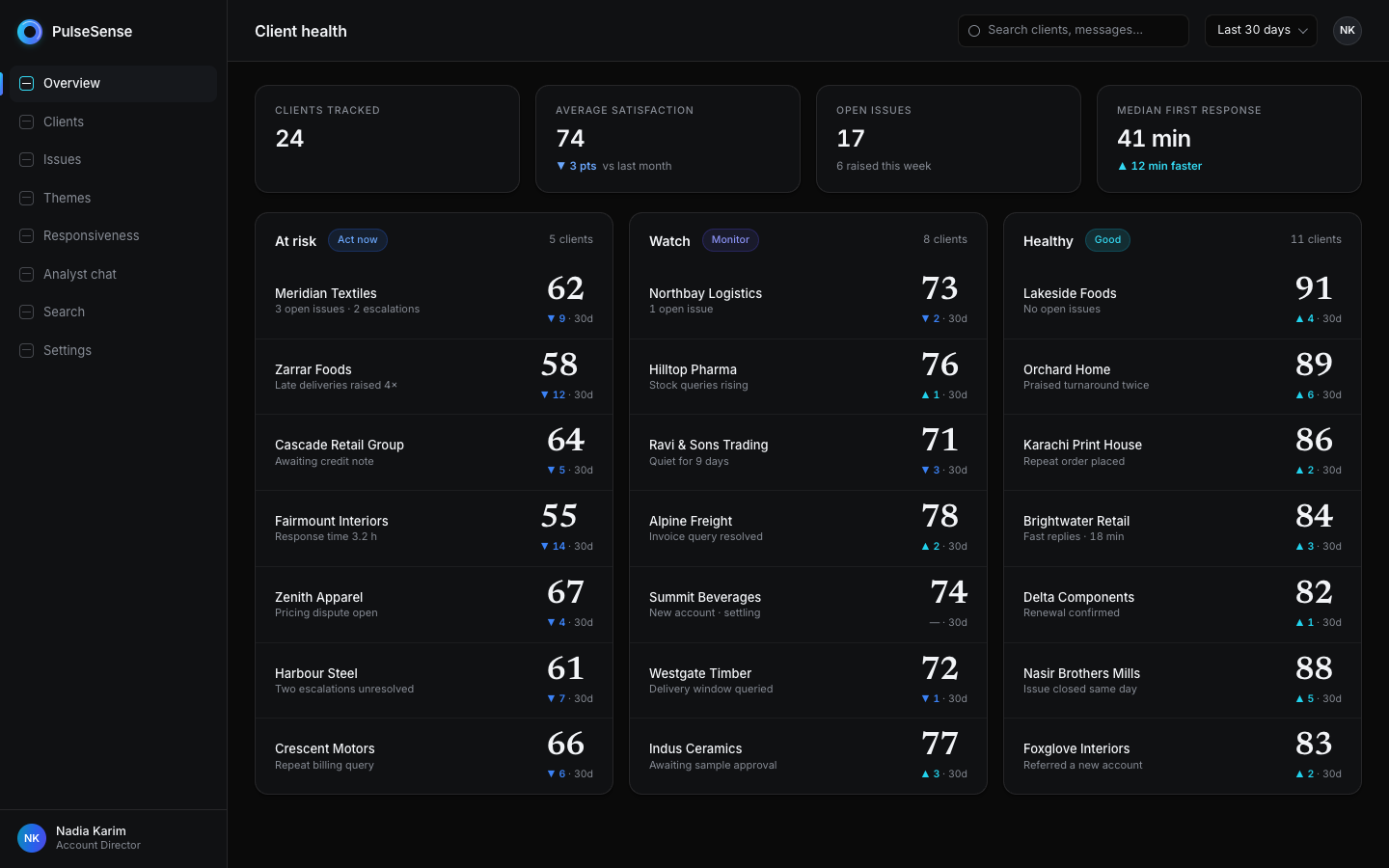
PulseSense reads those conversations and turns them into signal: which clients are unhappy and why, which problems keep recurring across accounts, and where slow responses are costing you goodwill. It flags the account that is drifting while there is still time to act.
Capabilities
What it does
The parts of PulseSense that do the work.
Client satisfaction, scored and explained
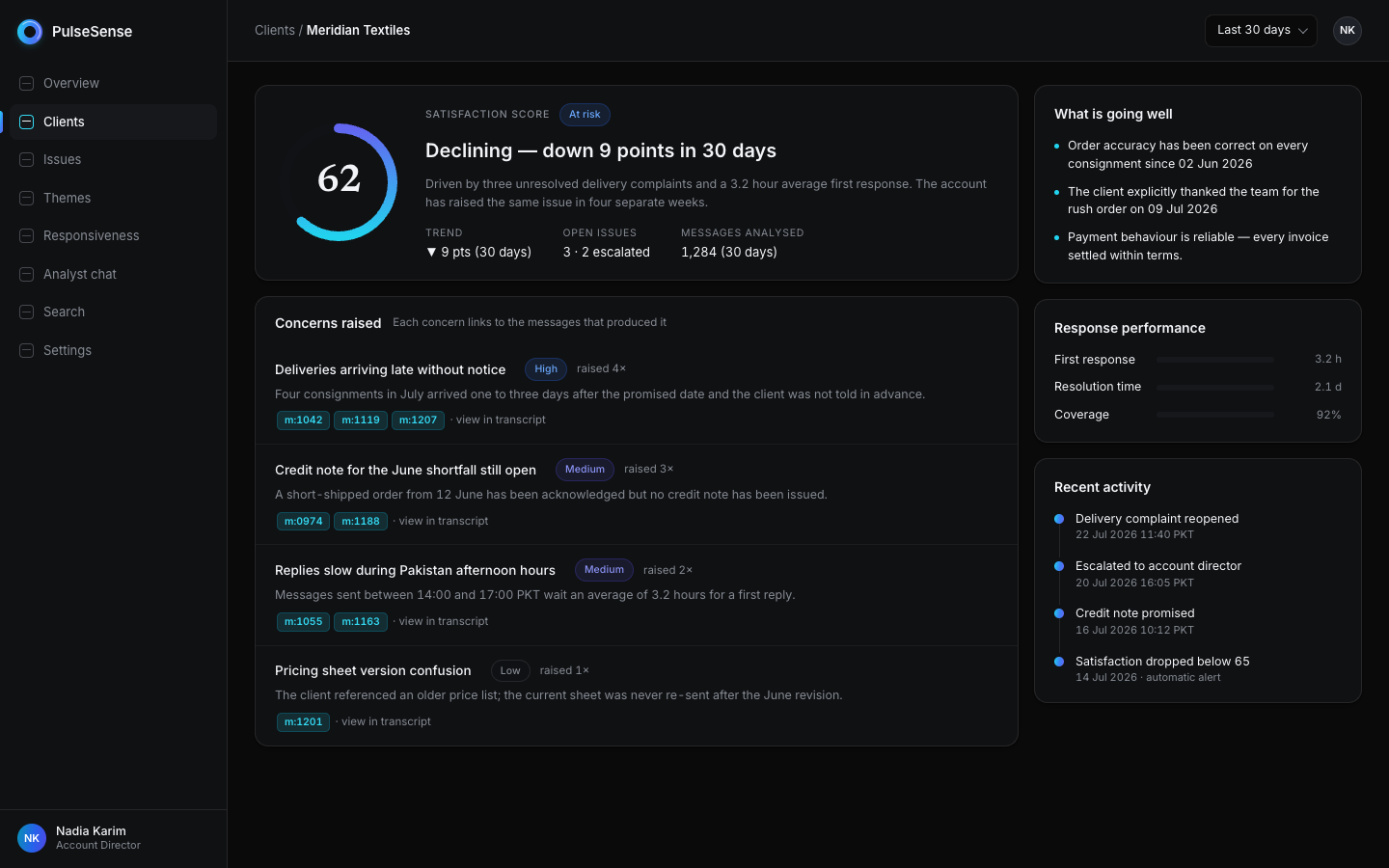
Every client carries a satisfaction score with a trend and a plain-English explanation — plus the specific messages that justify it, so the score is auditable rather than a black box.
Issues tracked as they emerge
Problems raised in conversation are opened as issues with a category and urgency, and closed when the conversation shows they were resolved.
Root causes, not just symptoms
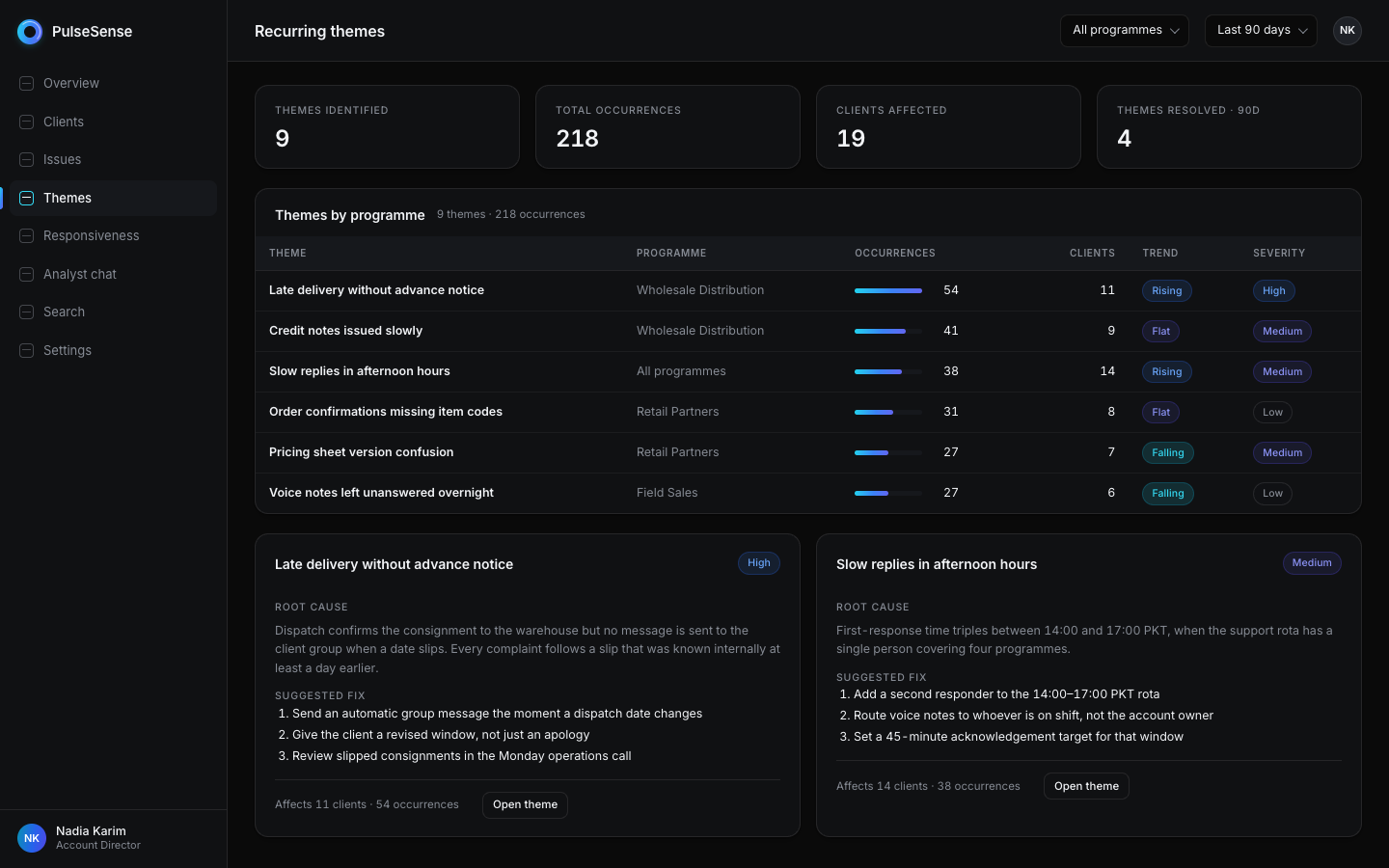
Recurring issues are clustered into themes across accounts, each with how often it occurs, how many clients it affects, and a suggested fix.
Voice notes and images, understood
Voice messages are transcribed and images are read for the detail they carry — order screenshots, error messages, receipts — so nothing is missed because it was not typed.
Bilingual by design
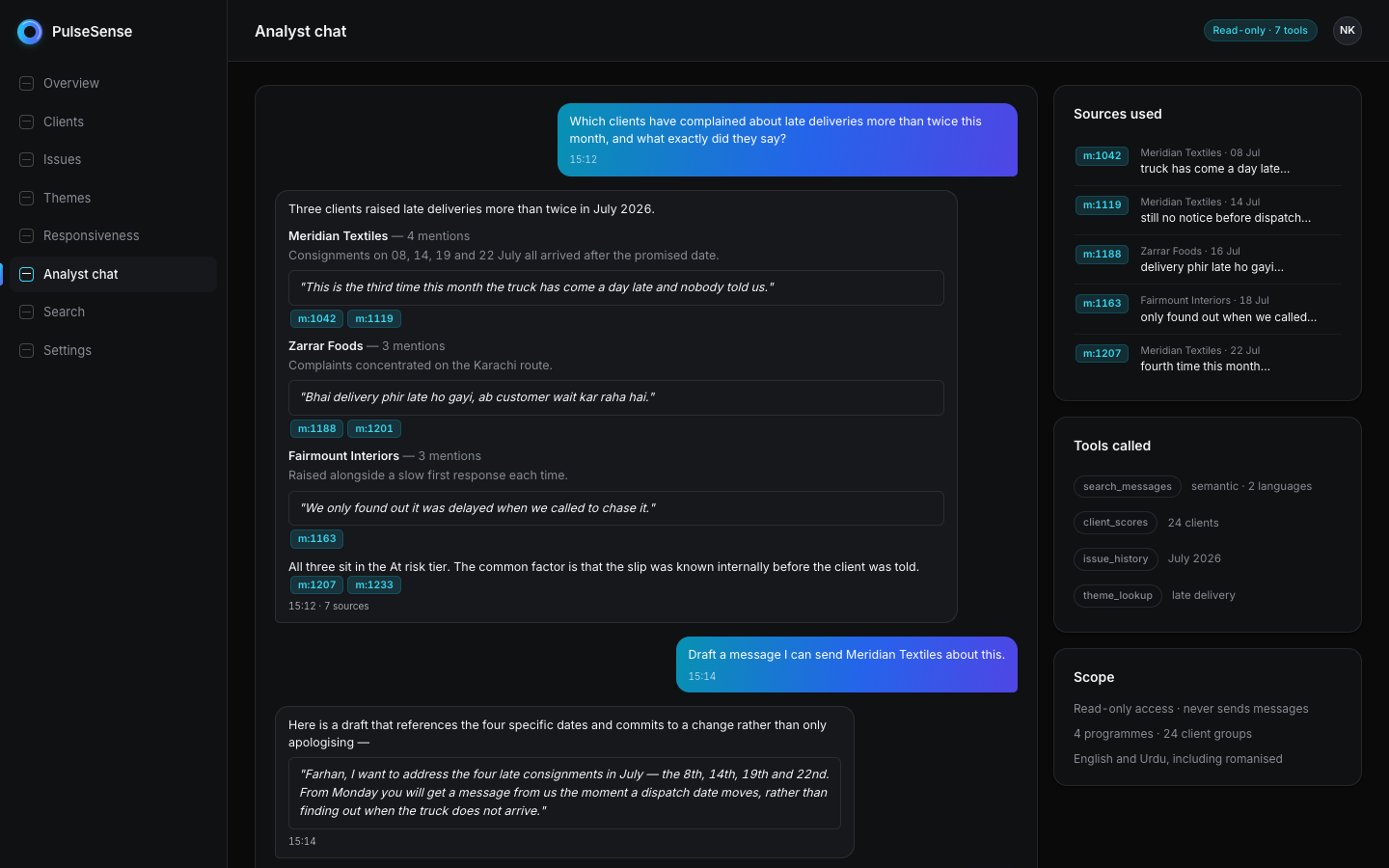
Conversations that mix English and Urdu, including romanised Urdu, are interpreted natively rather than mistranslated into noise.
Team responsiveness
First-response times, issues resolved and coverage across accounts, combined into a proactivity view of how the team is actually performing.
Where to act first
Satisfaction plotted against reply speed isolates the accounts where being faster would move the relationship most — a ranked list of highest-leverage fixes.
Ask in plain language
Ask about any client, theme or team member and get an answer that cites the exact messages it drew from, each one a link back into the conversation.
Search that understands meaning
Find every conversation about a topic across languages and phrasings, without needing the exact words that were used.
A look inside
PulseSense in use
How it works
From setup to running
- 01
Connect, read-only
The system observes the group conversations you nominate. It never sends messages and never posts on your behalf.
- 02
Understand every message
Text, voice notes and images are interpreted as they arrive. Media is read for its content and then discarded — only the text is kept.
- 03
Score and cluster
Conversations become satisfaction scores, open issues and recurring themes, refreshed continuously as new messages land.
- 04
Act on what surfaces
Work the at-risk list, fix the recurring themes, and ask follow-up questions in plain language when you need the detail.
- From message to insight
- ~10 min
- Languages understood natively
- 2
- Message types read: text, voice, image
- 3
Questions
About PulseSense
Does PulseSense read private messages?
Only the group conversations you explicitly nominate — typically the shared client groups your team already works in. It operates read-only and never sends a message.
What happens to voice notes and images?
They are interpreted at the moment they arrive and the media itself is discarded. Only the resulting text is stored, which keeps the retained data minimal.
How accurate is the satisfaction score?
Every score is published with the messages that produced it, so it can be checked rather than taken on trust. It is designed to surface accounts worth a human look, not to replace that look.
More questions are answered on the FAQ page.
See PulseSense on your own data
Tell us how your business runs today and we will show you what this looks like adapted to it.